
Introduction: When the Air Around You Starts Affecting How You Feel
Most people rarely think about the quality of the air they breathe. It is something so constant and invisible that it often goes unnoticed.
However, there are moments when the impact becomes clear. A person may feel unusually tired in a closed room, experience slight breathlessness in crowded places, or feel discomfort after spending long hours in polluted environments.
These sensations are often subtle and easy to ignore. Many individuals attribute them to fatigue, stress, or a long day. But in reality, the air quality around us plays a direct role in how the body feels and functions.
In today’s urban lifestyle, where exposure to pollution, indoor environments, and limited fresh air is common, this factor becomes even more important.
Understanding how air quality affects oxygen intake can help explain why energy levels fluctuate and why breathing sometimes feels more effortful than it should.
What Air Quality Really Means for the Body
Air quality is not just about pollution levels. It refers to how clean, oxygen-rich, and free-flowing the air is.
Clean air contains a balanced composition of oxygen that the body can easily absorb and use. Poor air quality, on the other hand, contains pollutants such as dust, smoke, and harmful particles that interfere with this process.
When the air is compromised, the body does not receive oxygen as efficiently.
This does not always lead to immediate or severe symptoms, but it gradually affects how the body performs.
Over time, reduced air quality can lead to:
- Lower oxygen intake
- Increased breathing effort
- Reduced energy levels
- Mild but noticeable discomfort
These effects are often experienced in daily life without being directly linked to air quality.
How Poor Air Quality Reduces Oxygen Efficiency
Oxygen efficiency refers to how effectively the body absorbs and uses oxygen from the air.
When air quality is poor, this efficiency is reduced.
Pollutants in the air can irritate the respiratory system, making it harder for the lungs to absorb oxygen properly. Additionally, these particles can occupy space in the air, reducing the proportion of usable oxygen.
As a result, the body has to work harder to extract the oxygen it needs.
This can lead to:
- Faster breathing during simple activities
- A feeling of heaviness in the chest
- Reduced stamina during routine tasks
- Slower recovery after exertion
Even if these symptoms are mild, they indicate that the body is not operating at its optimal capacity.
Everyday Environments Where Air Quality Drops
Poor air quality is not limited to outdoor pollution. It can be experienced in several everyday environments.
Common situations include:
- Crowded public transport or enclosed spaces with limited airflow
- Air-conditioned offices with minimal ventilation
- Urban roads with high traffic and dust exposure
- Indoor environments with poor air circulation
- Long hours spent in closed rooms without fresh air
These environments are a regular part of modern life, which is why the impact of air quality often goes unnoticed.
The body gradually adapts, but this adaptation comes at the cost of efficiency and comfort.
The Link Between Air Quality and Daily Energy Levels
Energy levels are closely connected to how efficiently the body receives oxygen.
When oxygen intake is reduced due to poor air quality, the body produces less energy at a cellular level. This can lead to a constant feeling of low energy, even without physical exertion.
Individuals may notice:
- Feeling tired in the middle of the day
- Reduced motivation for physical activity
- Difficulty maintaining focus
- A general sense of heaviness
This type of fatigue is often subtle but persistent.
Improving oxygen availability can significantly impact how energetic and active a person feels throughout the day.
Why Breathing Feels Harder in Certain Conditions
Breathing is usually an automatic and effortless process. However, in environments with poor air quality, it can start to feel more noticeable.
This happens because the body compensates for reduced oxygen availability by increasing breathing rate.
As a result, individuals may experience:
- Slight shortness of breath
- A need to take deeper breaths
- Discomfort in crowded or polluted areas
- Faster fatigue during movement
These sensations are signals that the body is working harder than usual to maintain oxygen balance.
Real-Life Scenarios: How It Affects Daily Life
The effects of poor air quality can be observed in many everyday situations.
For example:
- A commuter may feel exhausted after traveling through traffic-heavy areas
- An office worker may feel low on energy after spending hours indoors
- A traveler may experience discomfort in crowded or poorly ventilated spaces
- Individuals attending events or public gatherings may notice breathlessness
These experiences are often normalized, but they highlight how environmental conditions influence physical comfort and performance.
How Fit&Wise Portable Oxygen Can Supports Oxygen Intake
In situations where air quality is compromised, having access to a reliable source of oxygen can make a noticeable difference.
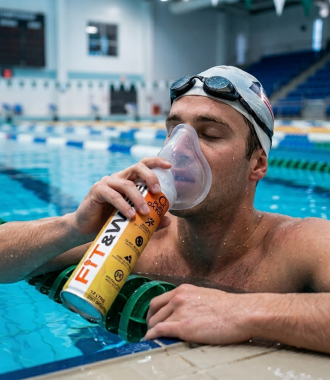
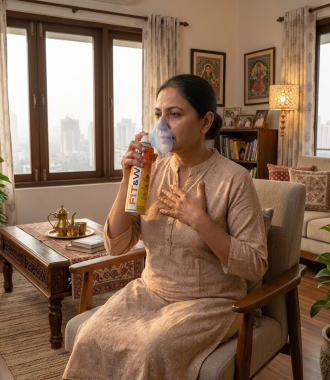
The Fit&Wise Portable Oxygen Can is designed to provide a quick and convenient boost of oxygen whenever needed.
It helps support the body during moments when natural oxygen intake is reduced due to environmental factors.
Key benefits include:
- Immediate support during breathlessness or discomfort
- Improved oxygen availability in polluted or crowded environments
- Enhanced recovery after exposure to poor air quality
- Better overall comfort during daily activities
By supplementing oxygen intake, it helps the body restore balance and function more efficiently.
Practical Usage in Everyday Situations
The portability of the Fit&Wise Portable Oxygen Can makes it suitable for a wide range of daily scenarios.
It can be used:
- During travel in crowded or polluted areas
- After long hours in enclosed indoor environments
- While commuting through high-traffic zones
- During outdoor activities in urban settings
- Whenever experiencing mild breathlessness or fatigue
Its compact design ensures that it can be carried easily and used whenever required.
Regular use in such situations can help reduce discomfort and improve overall well-being.
Simple Ways to Improve Air Quality Exposure
While external support is helpful, improving exposure to better air quality can also make a difference.
Some practical steps include:
- Taking short breaks in open or green spaces
- Ensuring proper ventilation in indoor environments
- Using air-purifying plants or devices where possible
- Avoiding prolonged exposure to heavily polluted areas
- Incorporating breathing exercises into daily routines
These habits can support the body’s natural ability to utilize oxygen effectively.
Long-Term Impact of Ignoring Air Quality
Continuous exposure to poor air quality can gradually affect overall health and performance.
Over time, individuals may experience:
- Persistent fatigue
- Reduced stamina and endurance
- Increased sensitivity to crowded or polluted environments
- Lower overall comfort in daily activities
Addressing air quality early helps prevent these long-term effects and supports better physical functioning.
Conclusion: Better Air, Better Living
Air quality plays a fundamental role in how the body feels, performs, and maintains energy levels.
Even slight reductions in oxygen availability can impact breathing, comfort, and daily efficiency.
Understanding this connection allows individuals to take proactive steps to support their well-being.
The Fit&Wise Portable Oxygen Can offers a simple and practical solution to help maintain oxygen balance in environments where air quality may be compromised.
By combining awareness, better habits, and supportive solutions, it becomes possible to breathe easier, feel more energetic, and maintain comfort throughout the day.